Spring is a great time for birdwatching. Ponds are full of ducklings and goslings, migrating songbirds bring color and music, and you can spot soaring eagles and cranes building their nests. Unfortunately, spring also brings unpredictable weather. A sunny stroll can quickly be interrupted by cold rain and wind. Determined birders might brave the elements, but for the casual enthusiasts – or anyone who prefers experiencing nature from the comfort of their own home – it’s the perfect time to play Elizabeth Hargrave’s board game Wingspan and the new Wingspan Americas expansion.
Wingspan sees players take on the role of bird enthusiasts building a wildlife preserve. There are four basic actions: gathering food used to attract birds or trigger some abilities, adding bird cards to your hand, playing one of those cards in your preserve, or laying the eggs used to fill some bird slots and earn points at the end of the game. It’s an engine-building game, which means turns start simple and become more complex as the game goes on. The more birds you’ve already played, the more powerful your actions become.
The rules may be simple, but you can build very complex combos. Birds are placed in three habitats corresponding to various game actions. Some birds just give you an effect when they come into play, like drawing cards. Others don’t do anything but are worth a lot of points at the end of the game. Players will want to pay very close attention to the birds with activated abilities, which trigger on your turn or when your opponents take a specific action. These can give you extra resources or ways to earn points.

For instance, the basic gather food action just lets you gather a single morsel of food based on what’s in the bird feeder – the beautiful dice tower included in the game. When you play a bird in the forest, you cover that spot up and future gather food actions will use the next best space – letting you take one food token and discard a bird card to get another one. But if you placed the blue-gray gnatcatcher in the forest, which has the activated ability to gain an invertebrate food token from the supply, you also get food from that card every time you take the gather food action. Figuring out the right balance of birds across habitats is key to making your actions as efficient as possible.
Wingspan is fairly easy to learn, though the complexity ramps up as more cards hit the board. The gameplay is deeply satisfying, encouraging each player to devise their own strategy while also paying attention to what others are working on to capitalize on triggered actions and avoid competing too much for resources. Every round has a different scoring goal that shapes strategy and fuels competition, and each player has their own secret bonus objective that can earn them big points at the end of the game. You can also learn a bit about birds while you play, since each card features a beautiful illustration and a fun fact about the animal.
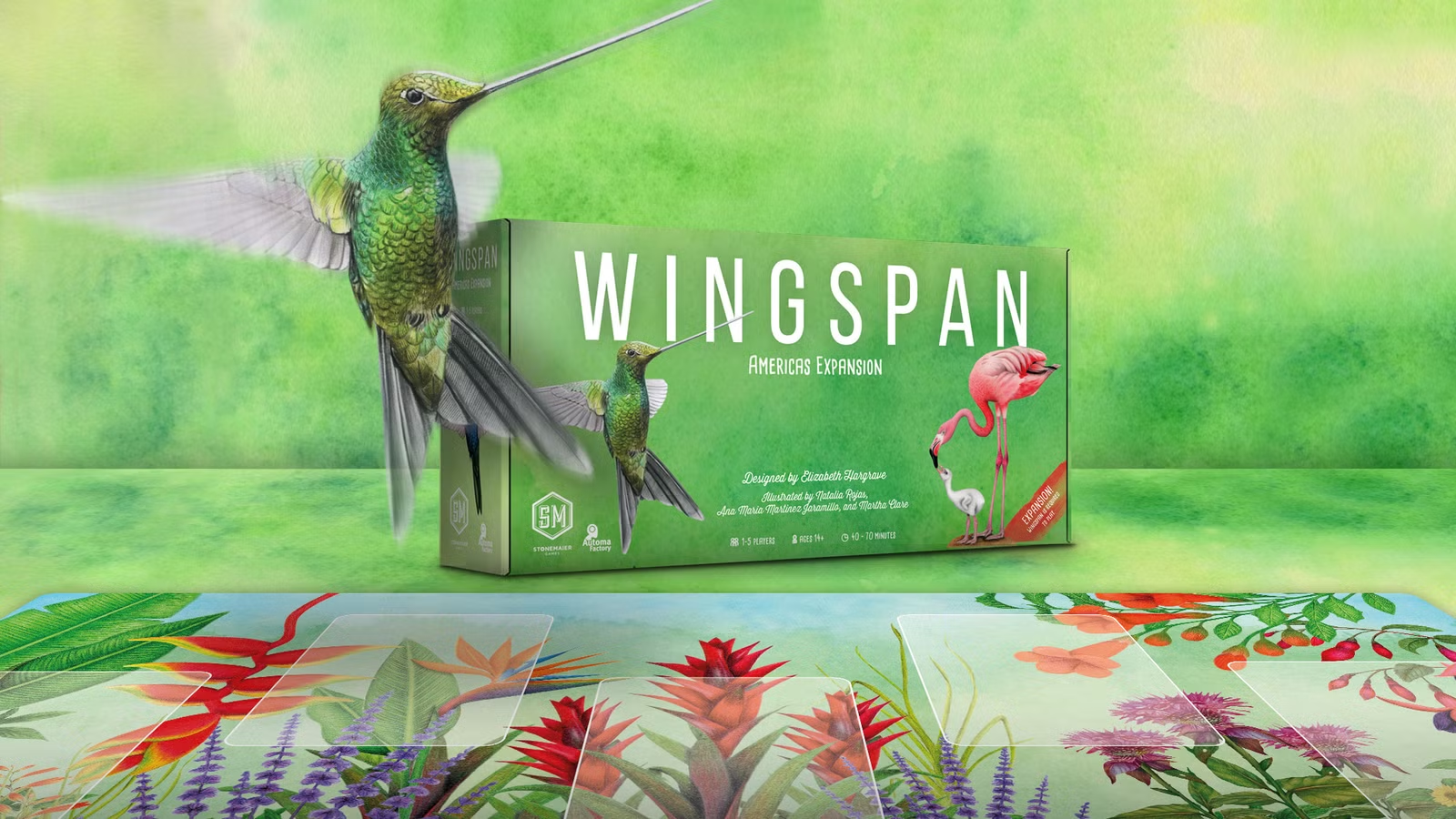
Wingspan’s popularity has led to a series of expansions. Wingspan European and Wingspan Oceania both introduced plenty of new species with unique mechanics. Wingspan Asia offered new modes of play for between one and seven players. The new Wingspan Americas expansion adds an entirely new way to compete for points and brings a bit more depth to the game’s early, simple turns.

Americas adds 111 new birds from Mexico, Central America, South America, and the Caribbean, further ensuring no two games of Wingspan will play out the same. But the expansion’s biggest innovation is the addition of hummingbirds, which have their own rules and board. While birds will move into your preserve and stay there, hummingbirds flit in and out between player boards and a hummingbird garden, making the gameplay far more dynamic.
Whenever you take an action to draw cards, gather food, or lay eggs, you also get a hummingbird action in the corresponding habitat on your board. An arriving hummingbird might bring you a resource, like an extra egg or card. A departing one lets you advance on a special hummingbird track, which can earn you more points at the end of the game. Advancing on the various tracks can also get you additional hummingbird actions that can be used to gather more resources or gain more points. Adding these extra boards means it’s easier to get your engine humming a bit faster. Even stalled players forced to take suboptimal actions can get a bit of extra help from a hummingbird.
Americas also adds more player interaction. Hummingbirds flit across boards, so you need to pay attention to what’s heading in and out of the garden that would be useful to you or your opponents. The need to activate hummingbirds can cause turns to take longer, something noted in the rulebook, which suggests larger groups reducing the number of actions each player gets to take if you don’t want the game to go for multiple hours.
While playing with Americas can be a bit more time consuming, the expansion doesn’t add too much extra complexity. It was easy to explain the new rules to my group and I think the element will be something we always play with, unless we’re gaming with someone who hasn’t played any version of Wingspan before. If it’s sunny this weekend, I’ll head to the park. If not, I’ll be looking for owls, wrens, and bluebirds on my gaming table.
Wingspan and Wingspan Americas are available at local game shops and online. The game was reviewed using retail product provided by Stonemaier Games.
About the Author