Italian writer Italo Calvino once said, “The translator is my most important ally,” referring to the power of translation to make literary works transcend their culture of origin. However, translation is rarely about simply turning a word into its closest equivalent in another language — sorry, AI tools developers. The subtleties of language are often lost in the process, and this is especially true when wordplay is involved. Hardcore fans of One Piece know this well, as author Eiichiro Oda loves to play with the complexities of the Japanese language, but not everything can be carried over smoothly during the translation process.
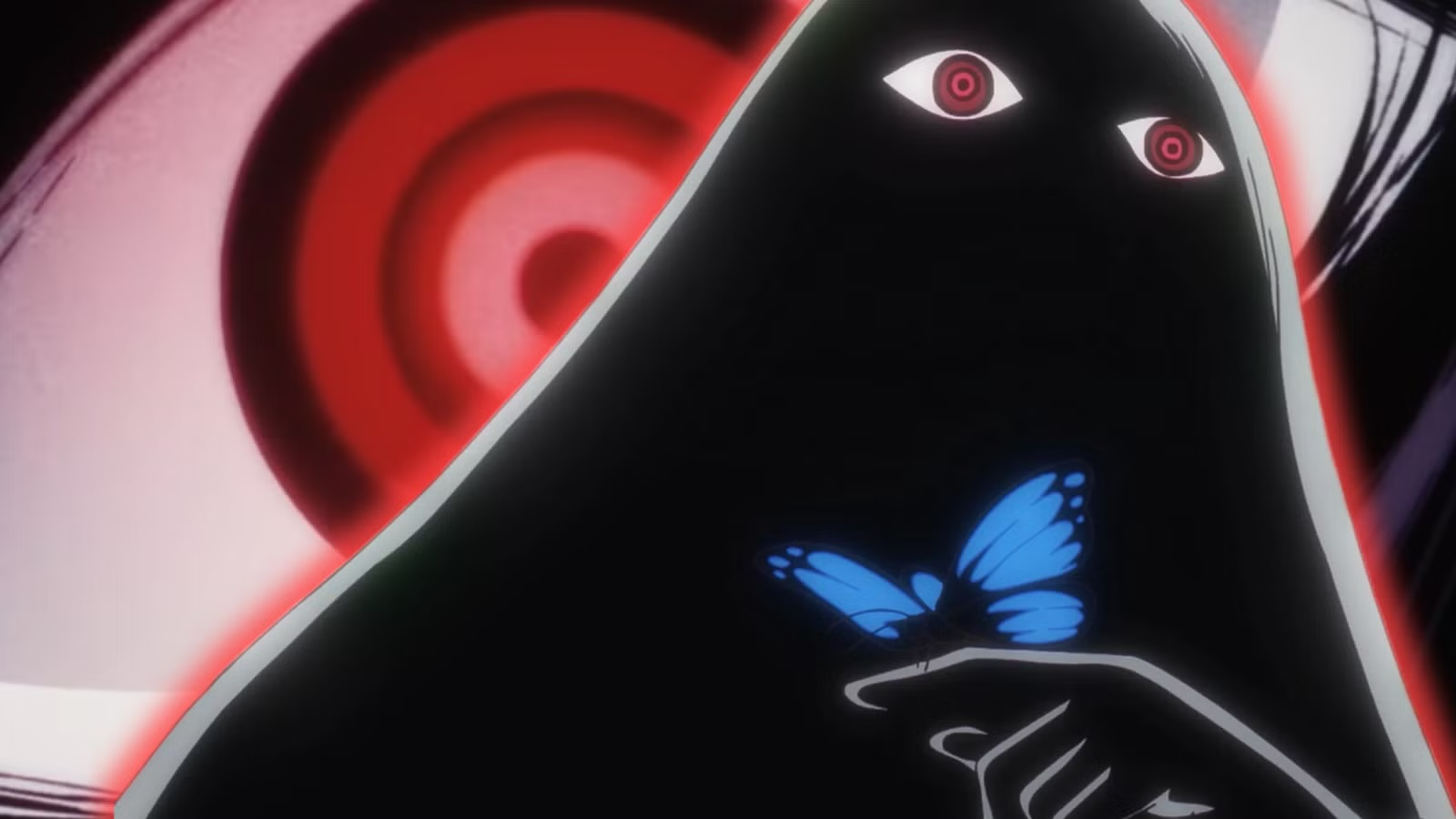
Chapter 1180 of One Piece is making waves among the community, and understandably so. We got our first look at the series’ biggest villain, Imu, in action, and what an impact he made. Oda was ruthless in his showcase of one of the most important characters in the story, and had Imu effortlessly take out both Zoro and Sanji with one hit. Few expected the Straw Hats’ strongest fighters, and the “two wings of the future Pirate King,” to be dispatched so easily, but this is a basic narrative tool for shonen, and Oda is a master at using the foundations of the genre effectively. In the process, we got a glimpse at Imu’s powers, and while they’re still mostly mysterious, looking at the Japanese version of the chapter may reveal a clue that was unfortunately lost in translation.

In the chapter, Imu uses several times a power he calls “omen,” which apparently can be wielded to a variety of effects, from healing his allies to blowing out his enemies with explosions of black flames. The English translation is correct: the Japanese chapter has the word in kanji, accompanied by the furigana (a reading aid that shows the pronunciation of kanji) in katakana characters that read “omen.” (Katakana is one of the alphabets used in Japanese, specifically to write loan words.) However, the kanji used are 魔気, which reads “maki.” The kanji “ma” can be translated as “demon” or “evil spirit,” while “ki” means “spirit.” Both should be familiar to longtime manga and anime fans, as they are used a lot in the medium. However, the closest reference comes from One Piece itself, and it connects this word to a power that many characters in the series use: haki.

“Haki” in One Piece is often translated as “ambition,” and it’s a key component in the series’ power system. The most skilled and strongest fighters in the world of One Piece all rely on haki, and without it, it’s impossible to overcome the effects of Devil Fruits. In the manga, haki is written as 覇気, with the kanji “ha” meaning “supremacy” or “victory,” and the same “ki” as in “maki.” The two words are too similar for this to be a coincidence, especially considering Oda’s tendency to make every small detail in his work matter. Many fans noticed this and shared it online, including skilled translators like Artur – Library of Ohara and sandman. “Omen” is even the title of the chapter, so it clearly has some significance beyond being just the name of an attack.
The key takeaway is that Imu’s power of maki could be an evil-charged version of haki, or, as some fans have speculated, perhaps haki was developed in the past to counter Imu’s abilities. We’ve seen during the climax of the Egghead arc how Joyboy’s haki, stored inside Emet, was able to instantly dispel the powers of the Five Elders and send them back to Mary Geoise. Considering that we know now that those powers come from Imu himself, then the connection and contrast between haki and maki becomes even more interesting.

Imu’s abilities are still a mystery. It’s even unclear if they come from a Devil Fruit, as the effect he has on the environment seems to suggest, or if there’s something more sinister involved. Still, this detail in chapter 1180 of One Piece shows that manga can be a lot more than an exciting story to read without catching your breath. Some mangaka, like Eiichiro Oda, are not just master visual storytellers, but also language experts who like to have fun with the opportunities offered by the Japanese language, where words can have not just different meanings, but also different readings and transcriptions.
About the Author