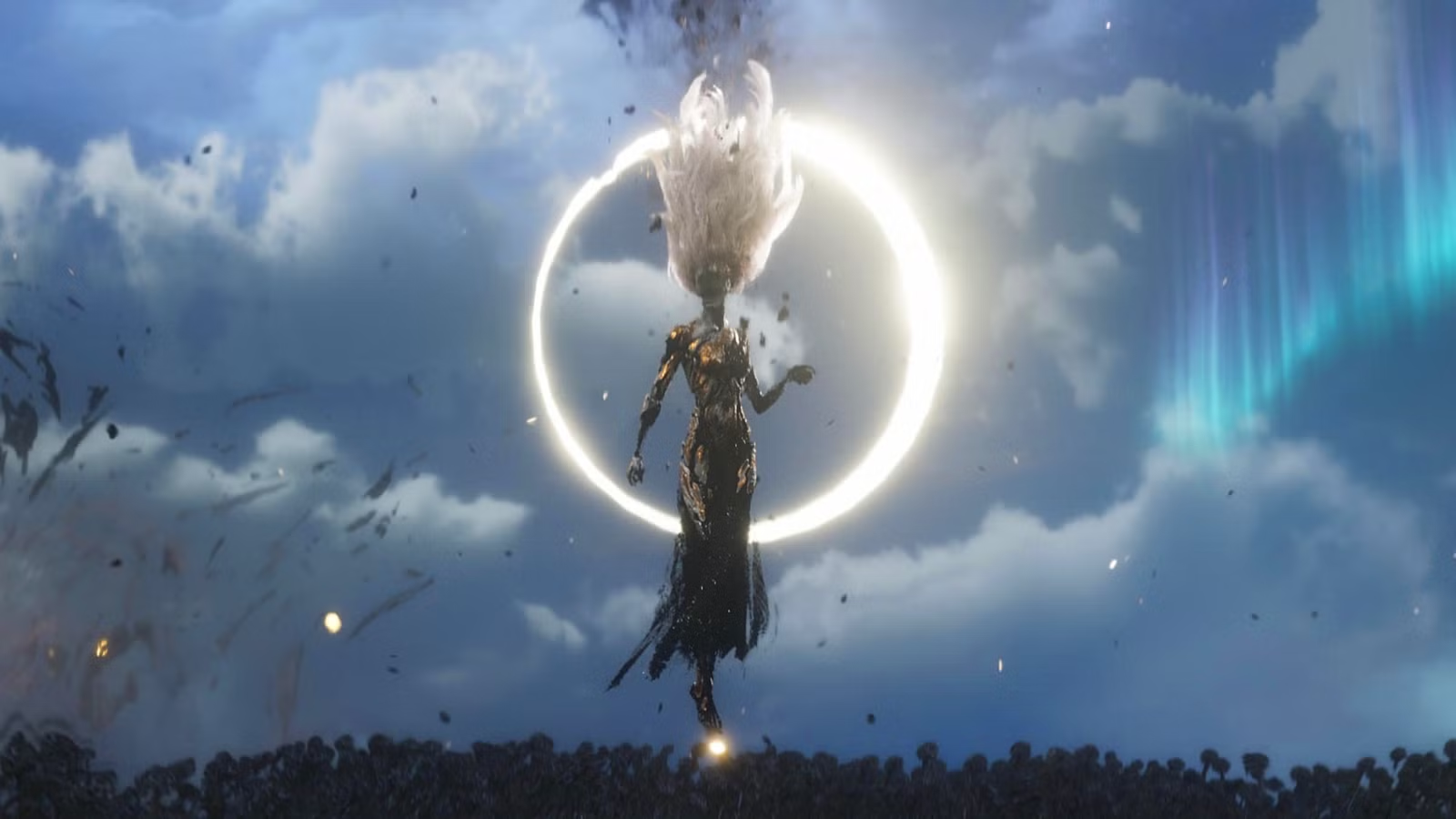
Clair Obscur: Expedition 33‘s final act and ending ruffled some feathers. Developer Sandfall Interactive did a bit of a bait-and-switch, subverting player expectations with some big reveals at the end of the second act. And the ending decisions were controversial, since there was no “good” ending. Someone was miserable in some capacity, and it was impossible to save everyone.
It wasn’t what people wanted. But such an outcome was the only possible type of ending for the story Sandfall told up to that point. It was an unflinching look at the tragedy of family relationships that we rarely see in video games, and it’s why Expedition 33 made such an impact on people who played it.
[Ed. note: This piece contains spoilers for Expedition 33‘s second and third acts.]

At the end of Expedition 33‘s second act, you learn that the expeditioners and all their forebears aren’t real. They’re just creations dreamed up by a grieving mother, sustained by a broken daughter — the collateral damage of a dysfunctional family. In the real world, that family, the Dessendres, belonged to a faction called the Painters and were in conflict with another faction, the Writers. Expedition 33 never gets into the specifics about these groups or why they hate each other, but the thing that matters is this: The Writers manipulated Alicia Dessendre (the real Maelle) into gaining access to the family home. They set it on fire, and Verso, the Dessendres’ only son, died. Alicia lost her voice and was badly scarred, spiritually and physically.
Aline, the Paintress, found a scrap of Verso’s soul in one of his canvases, and she used it and her painting powers (also not really explained in the game) to create a fantasy world where her family lived and where no fire happened. She retreated into this world and neglected her family, while Renoir, her husband, entered the canvas and tried to forcefully drag her out. Their conflict shattered the world, and his interference was responsible for the Gommage. Once Maelle-Alicia regains her memories and confronts the real Renoir in Expedition 33‘s third act, you have a choice. You can bring everyone back to life in the painted world and carry on in this idealized alternate reality, which is what Alicia wants. Or you can choose to side with Verso, who destroys the canvas and forces Aline and Alicia back into the real world to deal with the fire’s aftermath.
A handful of other games try to make you see both sides or humanize a “villain” by making you understand them. But they sabotage themselves by tying things up neatly by telling you what to feel or making sure wayward characters find the right path eventually. In The Last of Us 2, you’re very clearly meant to see Ellie as behaving incorrectly. “Everyone is being bad,” yes, but it’s kinda hard to sympathize with someone who kills dogs and pregnant women, versus Abby, who basically does one morally questionable thing at the start of the story before embarking on a series of acts many would consider virtuous. In Final Fantasy Tactics Advance, Mewt puts his friends through hell for his own selfish benefit, but then realizes his mistake and makes amends.

Expedition 33 has no such easy resolutions. Aline, the Paintress, escapes into the painted world instead of confronting her emotions and being present for her family, but she’s hardly the villain here. Renoir was, by his own admission, an absent figure in the family’s life before Verso’s death, and it’s telling that the painted version of himself makes family a priority. The only way Aline gets her husband’s support, twisted as it is, and the only time Renoir’s there for his kids is as a fantasy version of himself dreamed up by his broken wife. When real Renoir arrives, he demands everyone follows his plan. Alicia has to deal with the fire’s fallout the way he thinks she should; Aline has to grieve the way he thinks is acceptable. There is no room for compromise.
And then you have Clea, the older Dessendre sister, lost in the shuffle of everyone else’s problems. Alone, she’s plotting vengeance against the writers for starting the fire in the first place. Emotional support? A grieving-but-still-available ear to hear her problems? Not in this house! It’s easy to see her as a bit of a shit for her general cold aloofness and for how she treats Alicia, but when Clea doesn’t factor into anyone’s reality — barely even her mother’s painted world — her behavior is hardly a surprise. That’s without even getting into the Dessendre family’s problems from before the fire: the demand for perfection you see glimpses of in Verso’s memories (and the Visage Island storyline) and how love was predicated on meeting expectations and not given unconditionally. Painted Verso’s existence is another testament to rocky pre-fire relationships. Aline’s preferred version of her son is one whose reason for living is to help her. Just a little toxic.

You could say Alicia is at fault, not for the fire, since others manipulated her into that situation, but for how selfish her actions are. Maintaining the painted world for her own escape and emotional satisfaction is the same thing her mother did. She refuses to face reality, and she’s hurting a lot of other people in the process. But let’s be real. If she erases the canvas and goes home, what kind of life will she have? In an ideal world, maybe her family or even a friend, if the Dessendres know what those are, could help her heal. Alicia’s world is not ideal. Her father cares only for his wants; her sister (understandably) finds it hard not to blame Alicia for what happened; and even in a perfect dream world, her mother insists on making painted Alicia — the fantasy version of her daughter who could be anything and anyone — scarred and mute as punishment for the fire. No, I don’t blame Alicia for running away.
Basically, it’s a superbly crafted imitation of the clusterfuck shitstorm that we call family relationships in real life. There’s no easy blame to place here, as it’s impossible to tease individual threads out of the mass of selfishness, mistakes, and cruelty. Aline shouldn’t have done X, but if Renoir had done Y, then would she have done X to begin with? And how acceptable is it to rationalize what either of them did when their actions had much bigger consequences for their children?
It isn’t acceptable. Just like in complicated real-life family dramas, there’s often no redemption to be found, no absolution you can give. No way to sweep the harm everyone caused to each other under the rug and wish it better. There’s only understanding, and from that, the hope that you can move on, in whatever form “moving on” might look like — even if it’s not a happy ending.

Clair Obscur only gets better after you beat its final boss
The tears and challenges don’t stop after the credits roll
About the Author