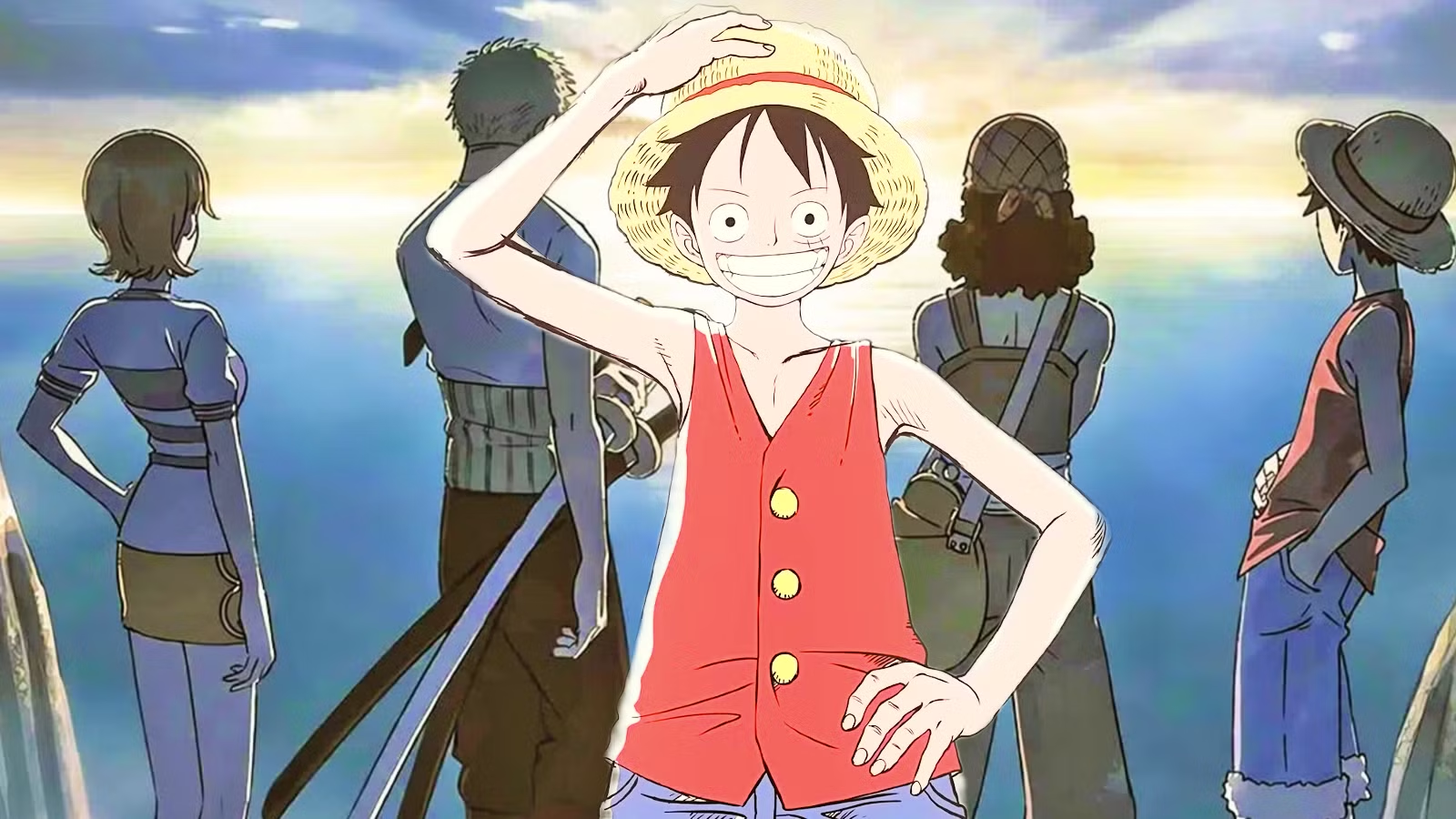
An anime getting a remake while the original series is still running is something that only One Piece could have achieved. There are similar precedents, like Fullmetal Alchemist: Brotherhood starting production while the original anime was still ongoing, but The One Piece — the new adaptation of Eiichiro Oda’s best-selling manga that will debut in February 2027 — stands out as an oddity.
The original anime adaptation of One Piece is one of the most popular series ever. The recent switch to a seasonal release model will ensure that it stays close enough to the manga without surpassing it and having to resort to filler, while guaranteeing the quality fans got used to in recent seasons. So, where does the need for a new One Piece anime come from?
The answer, in theory, is simple. The early seasons of the One Piece anime, which debuted in 1999, are hard to watch today. The production values were not exceptional, the art and animation were often low quality, and there’s an abundance of filler episodes. This is pretty normal for weekly anime at the time: Naruto and Bleach suffer from the same issues. However, those series have concluded, while One Piece continues to be the undisputed king of the anime and manga world. For now, The One Piece’s declared intention is to be a reimagining of its early arcs, realized with modern production values and sensibilities, showcasing a fresh artistic direction. If that’s the case, however, the decision to produce only seven episodes for season 1, and to stop at the meeting with Sanji, doesn’t make much sense.

The teaser images released for The One Piece are gorgeous. If the anime looks anything like that, it will be a visual spectacle that is in a completely different league compared to the early seasons of the original anime. This should also be a more faithful adaptation of the manga, but that won’t be enough to make this a hit with fans.
Seven episodes is a weird number for an anime season: Most series hover around 12 if they’re short, or 24 if they’re longer. The One Piece will have a longer runtime for each episode, more than 40 minutes, but the season will still end in an awkward spot of the story: Luffy’s encounter with Sanji at the Baratie restaurant, which occurred in episode 20 of the first anime series. In terms of pacing, a much better spot to end the season would have been the conclusion of the Arlong Park arc (episode 44 of the original anime) or the arrival in Logue Town (episode 48).
In terms of manga chapters, this first season will cover approximately up to chapter 50, halfway through the East Blue saga, which ends in chapter 100. This is a big tell that the entire remake project is currently envisioned as two seasons, but it’s hard to get behind this decision from a fan’s perspective.

The One Piece will air exclusively on Netflix with all the episodes dropping at the same time: a release policy that already caused the ire of anime fans in the case of JoJo’s Bizarre Adventure. The feeling is that The One Piece is conceived as a binge-watching experience that will attract fans of the franchise (who will always give a chance to anything One Piece-related) and Netflix subscribers who are curious after watching the live-action show but are intimidated by the original anime’s massive length.
Is this another case of “Netflix doesn’t get anime?” The One Piece is co-produced by Wit Studio, Shueisha (the publisher of the manga), Toei Animation (the studio behind the original anime), and Fuji Television, so it’s hard to put all the blame on the streaming giant. But it’s also undeniable that longtime fans don’t seem very excited about the prospect of waiting for more than three years to get such a short season, and more importantly, to see it end at such an awkward moment in the story. If this is the average production time, the second season will air in 2030. By then, the manga will likely have ended, and the original anime will be close too, while The One Piece will be asking its viewers to get excited about Arlong Park (which, to be fair, is an amazing arc).
It’s important, however, to understand the fundamental differences between the original anime and its remake. One Piece followed the weekly format for more than two decades: It means that only one studio was in charge of the production, and as long as the manga was running, there would be a One Piece anime. The One Piece, on the other hand, is fully ingrained in the seasonal production model. Wit Studio is in charge of the first season (and, I would imagine, of a second one too), but there’s no guarantee they will keep working on it in the future, just as there’s no guarantee that The One Piece will be around for a long time. These considerations have likely influenced the episode count and the amount of story covered in one season. It’s a wholly different production model, and it’s unfair to judge it based on old values.
Still, it’s undeniable that seven is an unusual number of episodes. From a viewer’s perspective, it would have been more organic to make this a 15-episode season, covering the entirety of the East Blue Saga just like the first season of the live-action One Piece show did. Sure enough, this could be just the first “cour” (a half-season), and Netflix could surprise-announce part 2 coming soon after the first season drops. The alternative is that Wit Studio just didn’t have enough resources to dedicate to the project to produce more than seven episodes in three years, or this was the plan since the beginning.
We’ll have to wait to get the answers to these questions; meanwhile, let’s hope that these seven episodes of the remake will be as memorable as the first 20 of the original.
The One Piece anime remake shows off its bold new art style
Netflix and Wit Studio reveal more from The One Piece
About the Author