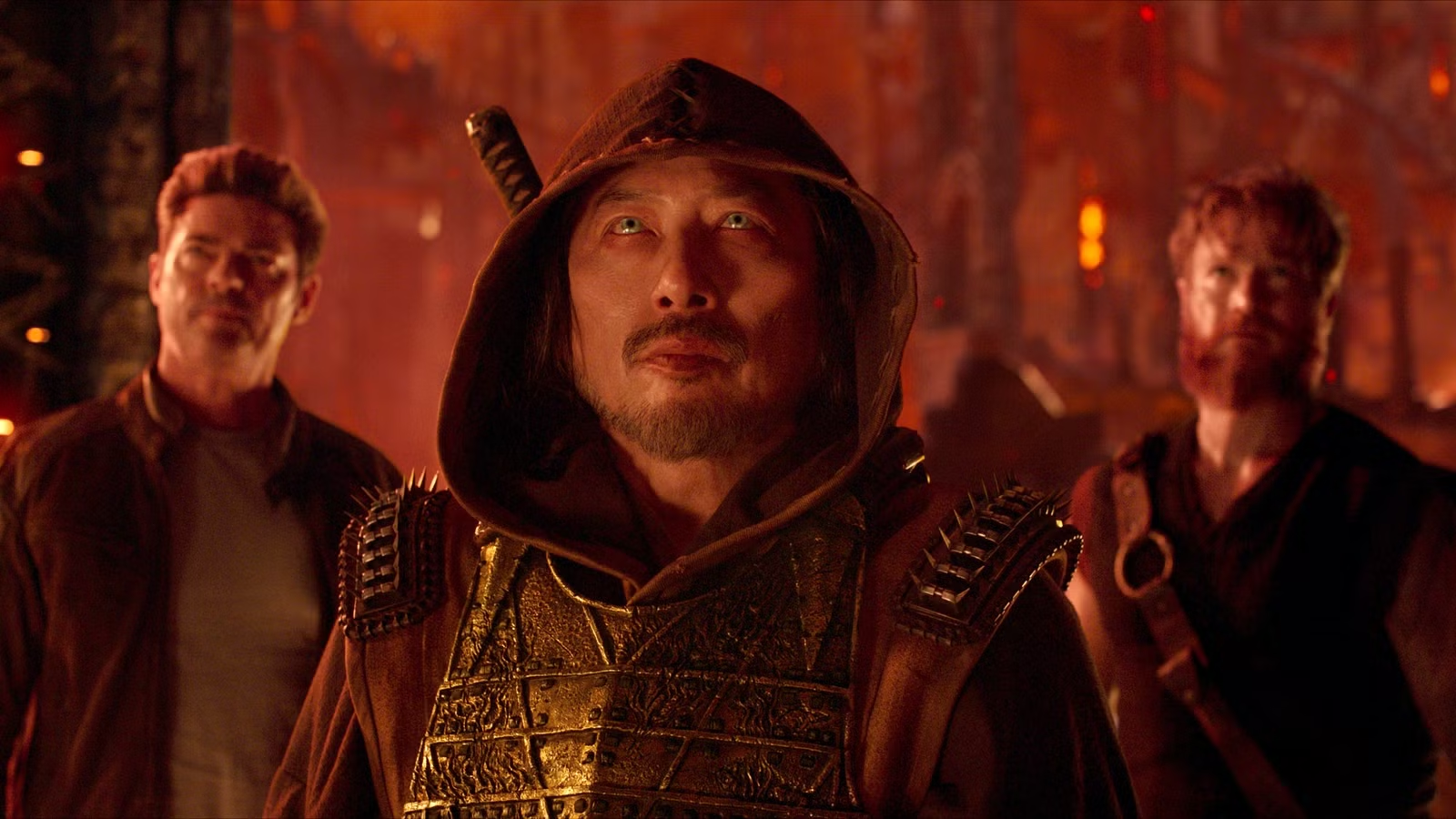
2021’s Mortal Kombat was one of the best experiences I’ve ever had seeing a movie in the theater, and it had nothing to do with the film itself. In April 2021, both the world and movie theaters were gradually re-opening after COVID quarantines, but neither had fully returned to normal. So I did the only logical thing an increasingly claustrophobic movie lover could do at that point: I rented out a movie theater and watched Mortal Kombat with about a dozen friends, at a rate of about $20 per person. The movie itself was pretty dumb, even by Mortal Kombat movie standards, and failed to even show the titular fighting competition that the franchise is named for. But I still look back fondly at the experience of shouting “Finish him!” at a massive AMC screen with some of my closest friends.
Fast forward five years, and while I wouldn’t describe 2026 as “normal,” you can have a pretty standard moviegoing experience these days. But that’s not what happened with Mortal Kombat 2. Instead, Warner invited me to a fan screening, complete with specialty cocktails like “Johnny Cage’s Midnight Mojito,” cosplayers, a pre-show DJ, and a T-shirt cannon. It was yet another night at the movies I’ll always remember, even though the movie itself was, once again, pretty forgettable.
Because yes, Mortal Kombat 2 is an extremely forgettable movie. Calling it a movie is actually pretty generous: It feels more like a series of well-choreographed fight scenes set against meticulously crafted backdrops, then strung together with a plot and dialogue that recreates the experience of watching a video game cutscene. Mortal Kombat 2 is also a full-throated apology for the 2021 movie, in response to fan criticism. (More on that momentarily.) If that’s what the Mortal Kombat fandom is looking for, more power to them. But if you’re expecting any of the hallmarks of quality storytelling, you won’t find them here.
Take the plot, which can be summed up with the title of the franchise. People fight, and they die while doing it. Screenwriter Jeremy Slater (2015’s Fantastic Four, 2017’s Death Note) builds his story around those fight scenes, giving returning director Simon McQuoid almost nothing to work with. When the characters aren’t fighting, they’re delivering exposition to help explain why Earth is being forced to participate in a fight against interdimensional warriors and wizards to determine the fate of humanity. And when they’re not recapping the plot, they’re delivering Marvel-style quips about how they don’t like the looks of whatever terrifying new setting they’ve been warped to for each subsequent fight. The one exception is Kano (Josh Lawson), the Australian mercenary whose crude sense of humor manages to pierce through this otherwise wooden exercise in IP management.
The only other actor bringing some much-needed levity to Mortal Kombat 2 is Karl Urban as franchise mainstay Johnny Cage. A washed-up action movie star with karate chops, Cage gets unwillingly recruited to fight for Earth in the tournament. His character acts as an audience stand-in, which means Urban’s job is to ask a series of incredulous questions about why anyone thinks he’s a good fit for a fighting competition that includes aliens, zombies, and a guy with robot arms. Despite all this, Urban manages to pull off a convincing performance as a cocky, aging Hollywood actor who somehow rises to the challenge of saving the world. He’s charming and charismatic in all the right ways, anchoring a movie that’s otherwise devoid of both those attributes.
Cage also acts as a replacement for Cole Young (Lewis Tan), an original character introduced in the 2021 film to fill a similar audience-surrogate role. Cole is still around in Mortal Kombat 2, but he eventually gets sidelined in a way that may elicit cheers from some audiences.

That’s not the only way in which Slater and McQuoid seem focused on apologizing for the previous movie. While Mortal Kombat was always designed to set up a sequel featuring the actual tournament, Mortal Kombat 2 wastes literally no time before getting to the competition, with a one-on-one battle to the death in the opening scene.
The majority of the movie is taken up by fight scenes, which are genuinely fun to watch if you don’t mind a few smashed skulls — McQuoid does an impressive job of recreating the games’ visceral gore. One fight even takes place on a narrow platform with acid on either side (seemingly inspired by the iconic Mortal Kombat level known as Dead Pool), which forces the characters to spar in the same 2D style seen in the games. That sounds silly, but it’s actually pretty badass, and sets a high bar that multiple other fight scenes in the movie easily clear.

We do eventually get a bit of plot outside the tournament. This mostly revolves around antagonist Shao Kahn (British bodybuilder Martyn Ford) attempting to cheat with a scheme that involves a magic amulet, godlike powers, and a trip to the Netherrealm (aka, Hell), where two more fan-favorite Mortal Kombat characters show up. But ultimately, none of that really matters, and even the non-tournament plotlines eventually succumb to glorious choreographed violence.
Of course, that’s what we’re here for. Mortal Kombat 2 was always going to be a kombat smorgasbord. Expecting anything else would be like dropping a quarter into a Mortal Kombat arcade cabinet and hoping to play a narrative-driven episodic adventure game. Maybe one day, some brave filmmaker will attempt to turn this fatality-focused franchise into true cinema (or at least something with a passable plot), but that day is not today.
And you know what? That’s fine. Mortal Kombat 2 is still making memories to last a lifetime, even if the film itself isn’t particularly memorable.
Mortal Kombat 2 arrives in theaters on May 8.
About the Author