There’s a specific kind of obsession that only exists between people separated by class. It’s not just envy, and it’s not exactly attraction either, even if sex does so often get tangled up in it. Sometimes you want someone’s life so badly that you start to confuse that longing with outright sexual desire, or even just a possessive need for proximity. You want their confidence. Their beauty. Their effortless ease. Their family, money, house, and history. Maybe you just want to become them.
That ugly, intoxicating confusion sits at the center of Saltburn, the decade’s freakiest pseudo-revenge thriller, which recently surged up the streaming charts after landing on HBO Max at the start of May.
Released in 2023, Saltburn is writer-director Emerald Fennell’s second feature-length movie. Her debut, Promising Young Woman, won an Oscar for Best Original Screenplay, but it was a smaller production with a similarly small box office return. Fennell found huge commercial success earlier this year with her lusty, spirited Wuthering Heights adaptation. Saltburn falls somewhere in between Fennel’s other films, both chronologically and in terms of how it titillates and terrifies in equal measure. Wuthering Heights‘s success may also be part of the reason why both of Fennell’s movies have surged on HBO Max in recent weeks, but rest assured Saltburn is the better of the two.
Whereas Promising Young Woman is a scathing indictment of the toxic masculinity of self-purported “nice guys,” Fennell’s other two movies share are intensely focused on outsiders seeking to destroy class systems from within. Wuthering Heights gives us the ill-fated lovers Catherine and Heathcliff in the late 1700s when rigid social status still defined the fate of everyone in England. Saltburn transports us two centuries forward for something decidedly more sinister.
It’s the mid-2000s, and Oliver Quick (Barry Keoghan) struggles to fit in at the University of Oxford due to a lack of proper manners. He’s awkward, has no charisma, and even less money. Seemingly by accident, he befriends the wealthy and hugely popular Felix Catton (Jacob Elordi). As their lives intertwine and bonds deepen, Oliver scores an invite to Saltburn — the family estate that Felix says inspired Brideshead from Evelyn Waugh’s Brideshead Revisited.
Fennell makes some heavy-handed references to literary classics in this way. Felix and Oliver’s budding friendship clearly evokes that of Charles Ryder and Sebastian Flyte (from Brideshead Revisited), blurring the line between fraternity and sexuality. But Fennell seems to draw that obvious connection simply to entice viewers with this portrait of idyllic youth, only to twist that into something much darker and shocking. As a filmmaker, she has a habit of hooking us with an enchanting premise only to veer into surprising sinister directions that serve either as a cautionary tale or as a critique of societal structures.

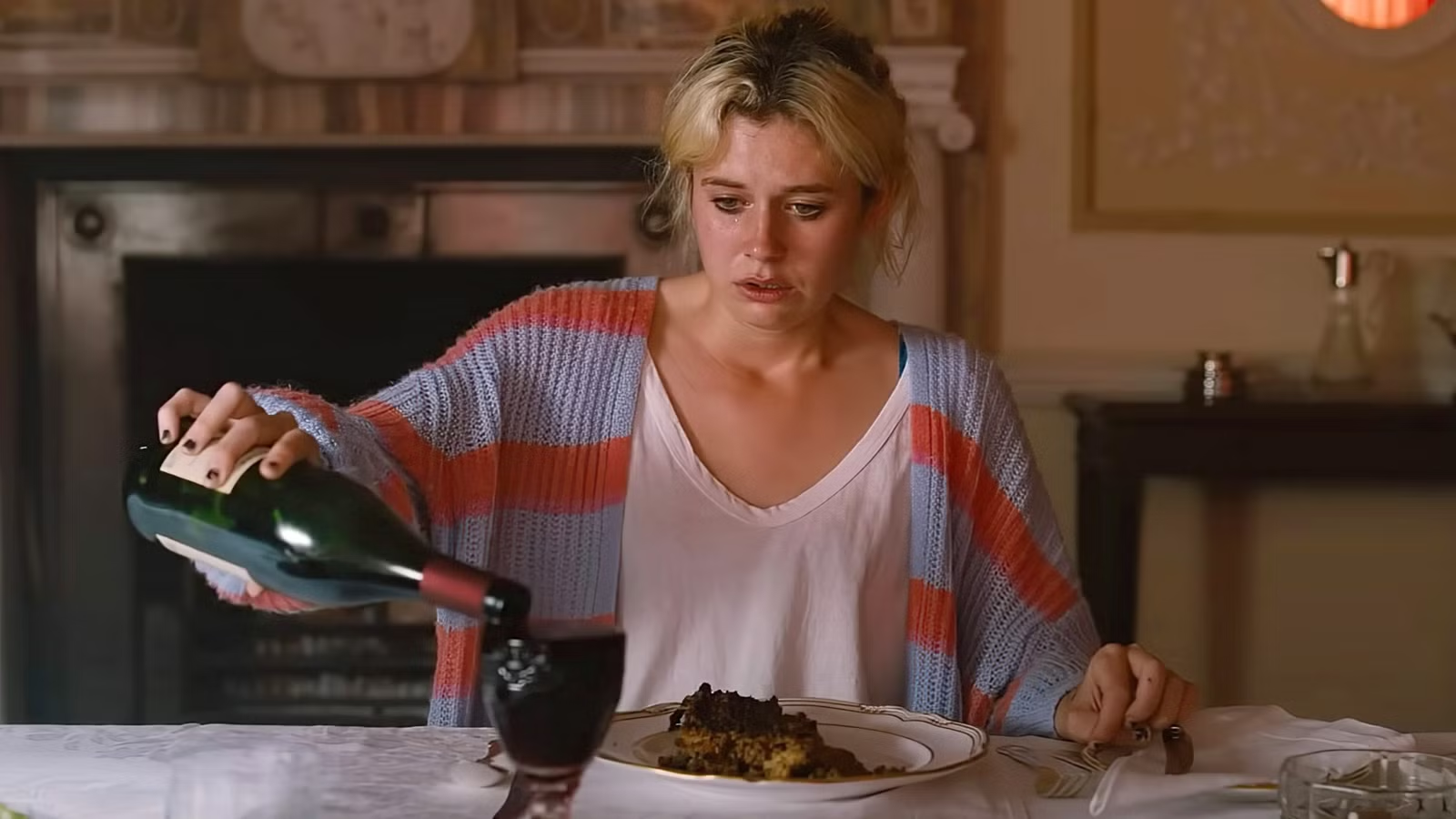
Saltburn feels less like a home than a hallucination of aristocratic excess strained to its breaking point in the present day. Decadent shows like Downton Abbey work because they show this lifestyle at the end of its prime. Saltburn is a dark shadow that should have ceased to exist decades ago. Every candlelit hallway and overgrown garden radiates the kind of effortless beauty that only exists when wealth has insulated a family from consequences for generations. Felix’s family members — played with delicious eccentricity by Rosamund Pike, Richard E. Grant, and Alison Oliver — each acts with a kind of fabricated lunacy bordering on the inhuman, like caricatures that came to life. They float through conversations with the detached confidence of people who have never once worried about money, embarrassment, or survival — people who have quite literally never worried about anything, or regretted any mistakes. Oliver mythologizes each of them, Felix most of all.
That’s what makes Keoghan’s performance so unnerving. Oliver doesn’t just admire these people, he studies them carefully. Keoghan plays Oliver like someone constantly learning how to perform being a certain kind of person. Every smile feels rehearsed. Every silence lingers a second too long. Even before Saltburn descends into the absurd and perverse, you can’t shake the uncomfortable feeling that Oliver has some kind of deeper agenda.
Saltburn isn’t your traditional “revenge thriller” by any means, but the emotional underpinnings ultimately feel the same. I won’t spoil all of the ways it titillates viewers with a very particular — and oddly satisfying — kind of revenge. But if you liked Fennell’s cinematic style in Wuthering Heights and want a downright better movie that explores similar themes in even more complex (and disturbing) ways, then watch Saltburn as soon as possible.
Saltburn is available to stream on HBO Max.
About the Author