Magic: The Gathering’s Spider-Man crossover set from last year is widely regarded as one of the game’s worst in recent memory. One of its biggest flaws was its considerably smaller size compared to other major Universes Beyond crossovers. Following new reveals at MagicCon: Las Vegas 2026 of the upcoming crossover with The Hobbit, due out in August, it’s become apparent that the second J.R.R. Tolkien Universes Beyond set will also be worryingly small.
While this wasn’t always the case in Magic, there are numbers in the bottom-left corner of every card face that indicate that card’s place in a given set. In recent years, the full art basic lands come immediately after the main set cards, with plains coming first. As first noticed by Draftsim, the number for the full art plains in The Hobbit is 194, indicating there are 193 cards in the main set. Most full sets have almost 100 cards more than that, with 2025’s Final Fantasy set being one of the largest at 309. This puts The Hobbit as barely larger than Spider-Man (188) and Teenage Mutant Ninja Turtles (190).
While I didn’t engage much with the Spider-Man set, I can say that pack-opening fatigue is real with TMNT. I’ve opened up dozens of packs, to the extent that it gets quite boring seeing the same commons over and over again. Despite my desperation, I never pulled an Ashcoat of the Shadow Swarm or a Super Shredder. Yet I have more than 10 copies of Cowabunga!, a flavorful sorcery that is absolutely useless unless your deck cares a lot about mutants, ninjas, and/or turtles. Even if I sold every single copy I own, it wouldn’t earn me enough to buy another play booster pack. If variety is the spice of life, then opening up a TMNT pack eventually feels like eating a New York City rat’s leftover slice of soggy pizza.

The same could easily be said for the Spider-Man set, which is even smaller. While there are some interesting cards, particularly as potential Commanders, the set’s overall identity doesn’t feel all that cohesive. Yes, there is an overabundance of spiders, heroes, and villains in it, but their abilities vary wildly. The set has more than 100 creature cards, with roughly 70% of them being legendary. That ultimately makes Spider-Man at large feel like a character gallery you might flip through, rather than play for their strategic value. Despite the fact that the set is legal in Standard, you don’t see any of the pros playing a single Spider-Man card. That’s pretty telling.
The Hobbit might be hampered by a similarly small set size, but there are reasons to remain cautiously optimistic. During a press Q&A session at MagicCon, Magic senior executive producer Mike Turian explained that the set emphasizes narrative first rather than focus on showing off iconic characters. “One of the things I really enjoy that the team has done — and we even tried to show it yesterday at the preview panel — was sort of visit every chapter of The Hobbit, right?” Turian said. “Because The Hobbit, as a book, it follows a progression.”
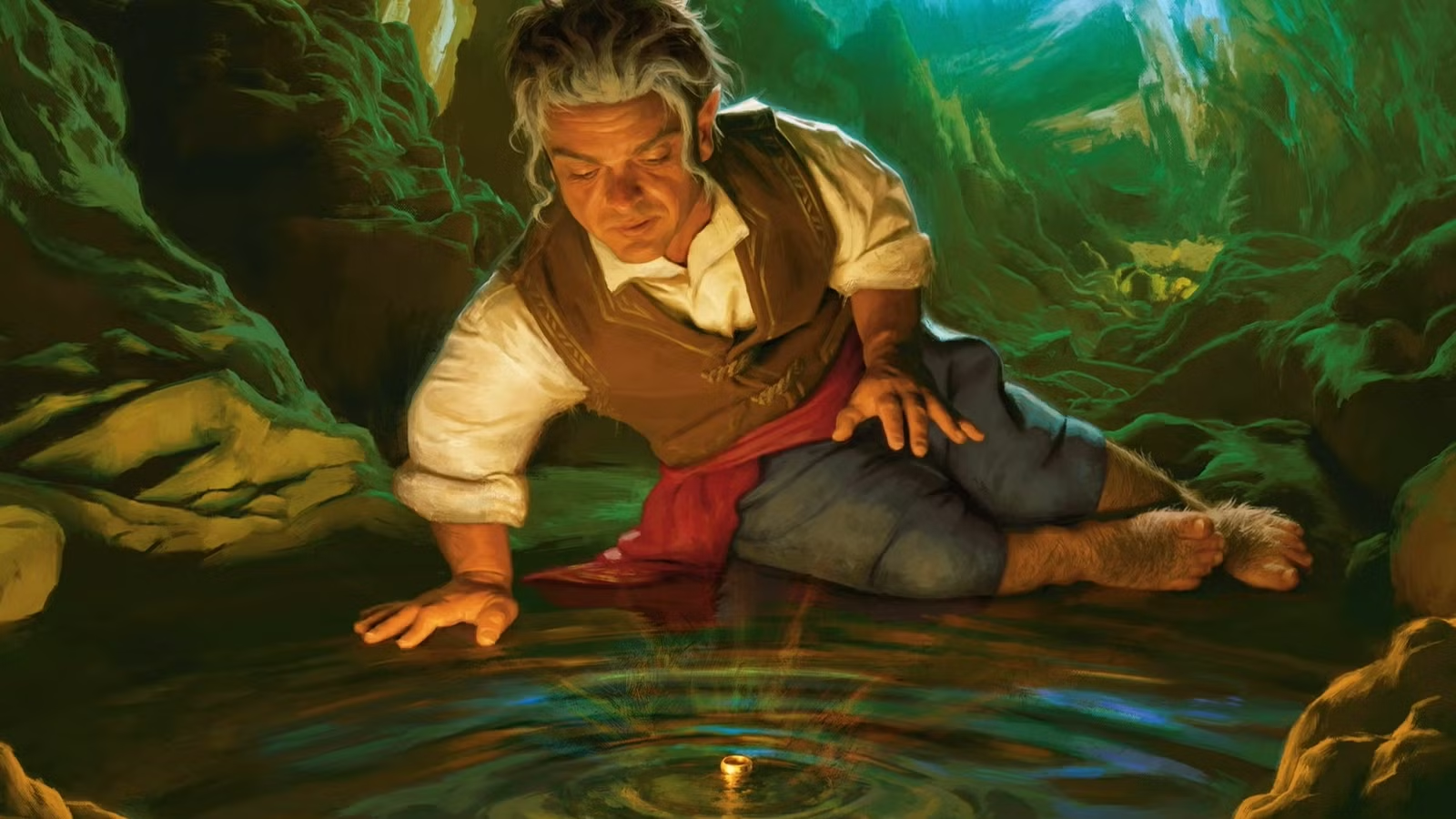
An Unexpected Party, for instance, highlights the early moment when the band of dwarves gather at Bag End and meet Bilbo Baggins for the first time. The Tom, Bert, and William card showcases a sequence not long after when the party encounters a trio of hungry trolls. Riddles in the Dark focuses on the moment when Bilbo and Gollum engage in a battle of wits. The cards were designed to service the story, as is the case in most Magic sets, but more often than not, Universes Beyond sets lack that kind of rich narrative identity. Yet with The Hobbit, various cards hone in on rich moments that might make you think, “Hey! I remember that scene from the book.” Here’s to hoping we get a card where Bilbo and the dwarves cruise downriver in a bunch of wine barrels.
If that focus holds across the full release, then The Hobbit may avoid the same trap that hurt Spider-Man and TMNT. Those sets often felt like assortments of recognizable characters and references first and cohesive Magic experiences second. That makes them both pretty forgettable. The Hobbit, at least so far, appears more interested in recreating the feeling of Tolkien’s journey itself. That may matter far more than whether the set has 193 cards or 300.
About the Author