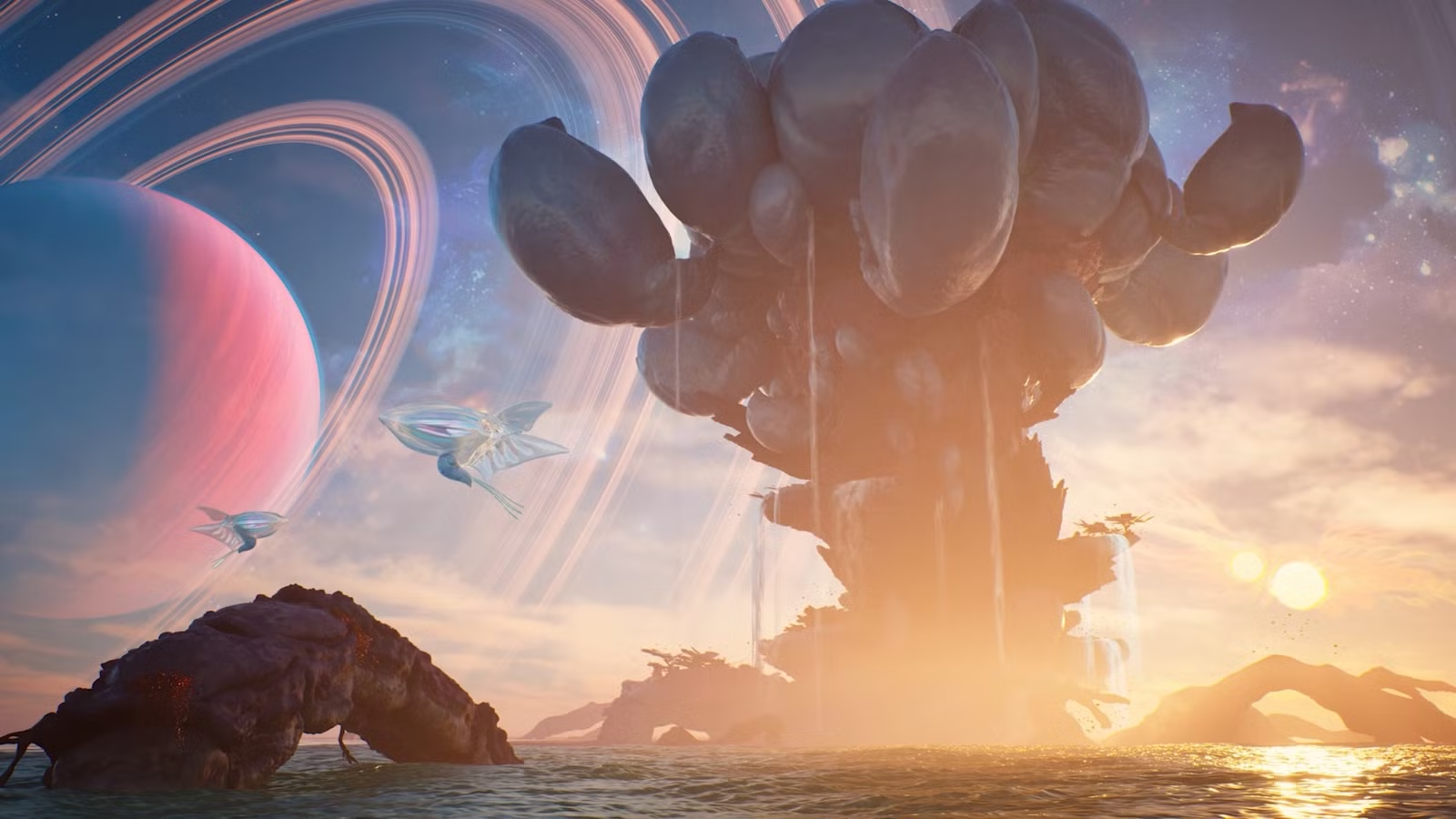
About 30 minutes into Subnautica 2‘s early access version, I made a big mistake. Several databank logs had just become available to me, and I got caught up reading about how the digital assistant issued to all company workers (that’s you) can cause dangerous feelings of attachment and psychosis. (Yes, Subnautica 2 is very on–point for 2026.) Anyway, I forgot that the databank menu doesn’t pause the game and only remembered when that assistant said I had 10 seconds of air left. My oxygen had slowly depleted, and I was too far from the surface to make it back in time. Death enveloped me.
This incident was not the last time Subnautica 2 captivated me to the point of fatal distraction. Unknown Worlds’ survival sequel might be unfinished, with years of development ahead. It’s definitely more of the same, but better. But it’s still an excellent survival game with strong potential.

In Subnautica 2, you are a literal wage slave working off debt by giving your life to a terrible corporation, scrounging around the ocean for means of basic survival. Then you explore further to get new tools, make a home, make more tools and better homes, and eventually not die quite as often. A twisty sci-fi tale unfolds between these milestone moments, and this one is twisty, even more so than the first game’s. In fact, it’s kind of the big highlight of Subnautica 2‘s initial launch.
Death isn’t a big deal in Subnautica 2, not mechanically for you or philosophically in the world of the game. Alterra, the big bad corporation that owns you, makes digital copies of its employees before dangerous expeditions. Death is temporary. Your body may be gone, but a new version of it can be reprinted with a backup file of your memory, fit for serving the C-suite’s needs. This is what happens to you at the start of Subnautica 2. Your expedition to a distant planet goes terribly badly, the ship disintegrates, all of your comrades are gone, and you’re the only one left to figure out what happens next. You end up on a planet — the wrong one, wrong in so many ways, like the fact that it tries to control your mind — and have to piece together what happened before your arrival.
Things move quickly — a noteworthy improvement, given how slow the original game is. In the span of a few hours, you go from wondering what happened to your coworkers to discovering serious factional divides among them, learning deadly secrets about the planet’s ecology, and finding ruins from a civilization that, according to your employers, shouldn’t have existed. And pulling the strings of all this, deciding what’s important and who gets to live or die permanently, is your digital assistant. Most of your friends didn’t trust it for one reason or another. Some even thought it was intentionally torturing them.

You wonder if your dead friends were just biased against the machine. After all, it says it had a good reason for its actions. Perhaps the horrors it caused are nothing more than a misunderstanding, just the unfortunate side effects of utilitarianism. Then you think about how this device has control over your life and deaths. You remember that each time you discover something new, it immediately tries shaping your view of it, lest you develop a free, original thought of your own. You hear its unnatural pulse throbbing through every corner of your living space and listen to it try on emotions, talking to you about memories of your friends it killed as if it knows them and understands you. Nothing this insidious and perverse could be right.
This conflict between what’s human and what isn’t spins out in dozens of ways throughout this initial part of Subnautica 2. Are efficiency and easy access to information worth giving up your soul? Are so-called primitive people the ones with a better grasp on the world? . There’s a middle ground here, but just as real-life societies are drifting further away from it, no one in Subnautica 2‘s discovered what it could be yet. It all sounds trite on paper. But Unknown Worlds deserves credit for making it timely without being heavy-handed. The game’s themes have an emotional intensity that goes beyond just another, familiar diatribe against capitalism.
This stronger emphasis on storytelling is the biggest new thing that Subnautica 2 does. Structurally, the rest of the game is very close to Subnautica and Subnautica: Below Zero, with a couple of improvements and one change that doesn’t quite live up to its potential.
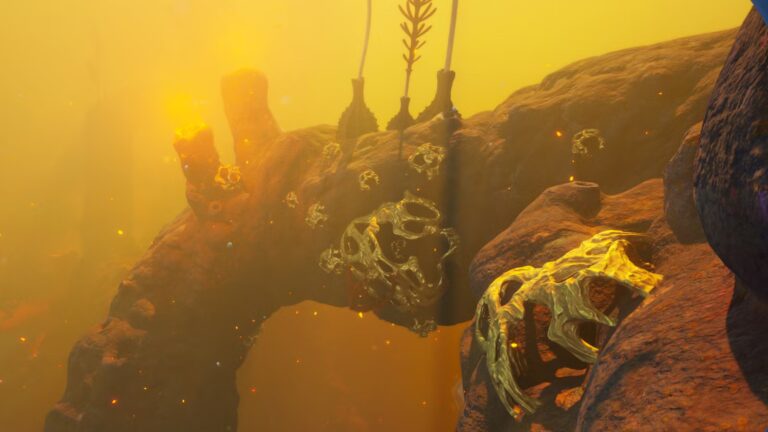
Subnautica 2 throws a lot more wildlife at you than its predecessor. In just the first few hours, you’ll run across half a dozen species of harmless fish, giant crabs wearing domes of coral for shells, evil parasites, a winged ray that looks like it descended from heaven, hammerheaded fish with giant dinosaur-like neck frills, and a horrible squid that would probably make 20,000 Leagues under the Sea author Jules Verne do the Leo pointing meme, had he not been dead for more than a century. It comes so close to being a vibrant ecosystem bursting with life, but skews a bit more toward exotic, slightly murderous aquarium once the newness wears off.

Unknown Worlds clearly went to the trouble of giving these fish some purpose to exist aside from your amusement, though it has little significance on them or the environment. Those hammerheaded fish will occasionally find each other and butt heads, only to swim off a few moments later. Massive crabs stalk the ocean floor and do nothing, while magma-filled jellyfish push out heated bubbles of gas and vibe unbothered by anything around them. They’re beautiful to look at, but unless one of these oddities tries to eat you, their existence has little purpose.
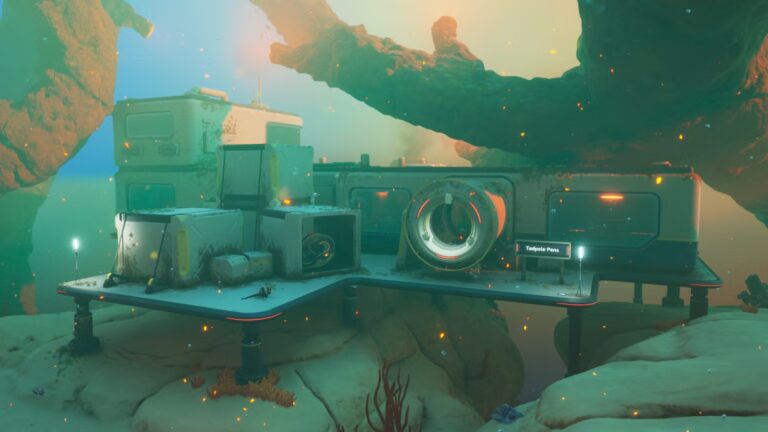
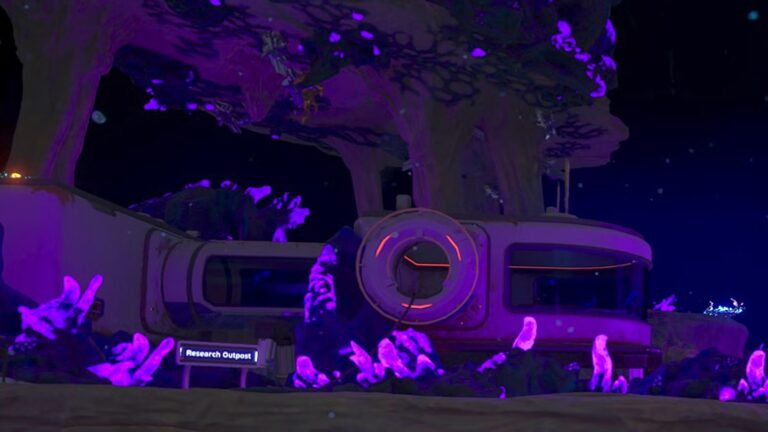
Beauty has more value elsewhere in Subnautica 2. It’s why most of my additional accidental deaths happened. That, and the unwavering sense that you might be on the cusp of finding something exceptional or useful. Unknown Worlds draws your attention to spots of potential interest with elements of particular beauty. A large and ornate coral dome might catch your eye, for example. Then you notice a small crack at its base, with just enough room to squeeze through. You get a glimpse of luminous flowers lining the wall beneath and, when you do squeeze through, find a vast cavern filled with glowing plants of all descriptions, rare minerals, an abandoned habitat, and an essential upgrade. Sometimes it’s just a cave. But if everything was exciting all the time, nothing would really be exciting.
On a more practical level, Unknown Worlds has cleaned up the interface for Subnautica 2 and made everything feel like it moves faster. Crafting recipes are laid out more efficiently without taking up the entire screen; the hotbar stands out less dramatically; menus are easier to read and less cramped; and looking at the menus for machines doesn’t make your eyes feel like they might explode. You acquire personal upgrades and make physical progress across the planet at a faster pace as well. There’s strong forward momentum in the early hours, driven by the urge to explore, the means to do so quickly, and a story that quickly branches off in unexpected directions.
In other words, it’s Subnautica, but better. Subnautica 2‘s initial early access launch reminds me of what Obsidian did with Grounded 2, recreating a more polished version of what worked the first time. That’s not a bad thing! I’ve spent 20 hours with Subnautica 2 and still want to keep playing. It’s just hard to see what makes this a sequel yet.
About the Author